

 |
|
Author: Nigel G Bruce
Publication Date: May 18, 2012
The UN Secretary General’s campaign for energy access is rightly seen as a long overdue initiative with tremendous potential for global development because it can simultaneously address three of the most important issues for human security and welfare: economic development, climate change, and health. That is, so long as the right investment decisions are made in moving towards the ambitious target of universal access by 2030.
In the relatively short period since this initiative was launched, a great deal of attention has been given to the potential for economic development and climate mitigation (and especially the role of renewable energy), but relatively little to what is needed to ensure that the full health benefits are realised. In this dialogue, health needs to be on an equal footing with the other pillars of this enterprise - economic development, environment and climate – for three important reasons: the large health benefits that stand to be gained, the need to plan now for health in policy, and the added momentum that will come from engaging the international health community.
Health benefits from universal energy access
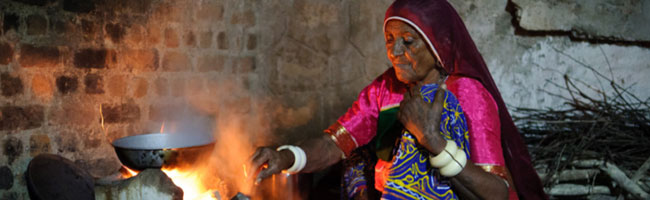
The lack of access to clean, safe and efficient energy in the homes and communities of almost half of the world’s population is taking an enormous toll of the health of some 3 billion people. Much of this is caused by air pollution in and around the home from burning solid fuels (wood, dung, crop wastes, charcoal, coal) in open fires and other traditional stoves. It’s not just solid fuels either, as there is growing concern about air pollution emitted from keroseneuse. WHO estimates that nearly 2 million people die prematurely each year because of this household air pollution. Safety is another big issue, open fires, unstable pots, candles and kerosene lamps result in probably several hundred thousand burn deaths per year, and many more severe injuries with terrible life-long consequences through disfigurement, disability and stigma. Collecting fuel puts women and children at risk of injury, and in some parts of the world, gender-based violence including rape. Added to these direct effects on health, are the complex, hard to measure effects that the poverty, loss to time and lack of opportunity resulting from reliance on inefficient, polluting and unsafe household energy have on a family’s health. There are also consequences in the local community. For example, many rural health facilities lack electrical power affecting everything from vaccine storage to carrying out medical procedures with inadequate lighting. Lack of energy access also constrains provision of adequate, safe water for human consumption and for agriculture. The list of how energy access impacts on health is long indeed. To date, however, we only have reasonably reliable figures for the effects of household air pollution, and one of the priorities is to provide a much more complete picture of how much, and in what ways, universal energy access can benefit health.
Planning to ensure health benefits are maximised
Investment in universal energy access will involve choices, for the international community, countries, businesses, and households. While access to modern energy is likely to benefit health overall, there are also risks, and not all options will have the same benefits. All of the current debates on energy production, distribution and consumption have consequences for health, whether it be coal vs. nuclear for generation, grid vs. local off-grid for supply, advanced biomass combustion (renewable) or LPG (fossil) stoves (or other cleaner fuels such as ethanol) for cooking, to name but a few of the more important considerations. It is vital therefore that the health consequences of these choices are part of the decision-making. There is some urgency to this as well - these investment decisions are being made now, and will need to move fast to achieve universal access to modern energy by 2030. The good news is that we already have tools for assessing the expected health consequences of projects, policies and programmesin the planning stage, namely health impact assessment (HIA), and it will take relatively little to adapt these to the needs and circumstances of energy access. We also have a strong basis for global monitoring through the WHO household energy database which holds cooking fuel information from over 500 national surveys and is currently being extended to include heating and lighting. Linkage of data on energy use, implementation of effective policies, and modelled health impacts is now possible and would provide a powerful tool for monitoring progress.
Gaining momentum from engaging the international health community
Despite the very large potential for improving health, recognition by the international health community of energy as a high priority issue has been, and remains, low.Our biomedical dominated world is often slow to see, and act on, the enormous potential for health improvement offered by dealing with social and environmental issues, and this has certainly applied in the case of energy access. There are a number of specific barriers to action that can be identified. Historically, health scientists and practitioners have not seen the evidence as very convincing, compared for examplewith that for other health interventions such as medication and vaccines. It is true that in relative terms research on the health impacts of implementing clean household energy services in developing countries has been limited in scope and poorly funded. The mixed experience with implementing effective interventions, for example improved cook stoves at scale, has also (misguidedly) deflected attention and investment. This is however beginning to change with some new studies completed and showing important health benefits, for example from the national improved stove programme (NISP) in China and the RESPIRE trial in Guatemala, but there is still a need for broader-based and more robust evidence, including on the risk reductions at different levels of air pollution exposure and on the impacts of large scale, sustainable programmes. It is also the case that where health agencies including Ministries do recognise the potential impacts, they tend to see the solutions as the responsibility of others, and move on to other issues that in severely resource-constrained circumstances are seen as higher priority for the health system to concentrate on.The health system does in fact have a very important role to play, including through raising awareness at all levels (e.g. national media, in schools, health services and communities), providing information on risks and health impacts, carrying out evaluation to generate evidence on intervention effectiveness, and in joint planning. Bringing the full attention of the international health community to bear on this problem, from researchers, through international donors to health ministries and services in countries, will greatly add to the momentum for change. The UNFoundation, through the Alliance for clean cook stoves and energy access initiative, has put health as one of its core goals, reflected in the Alliance mission to ‘save lives, improve livelihoods, empower women, and combat climate change’. This now provides a unique opportunity to mobilise the health community and bring their influence and resources into the heart of our joint efforts.
Next steps
Each of the issues discussed here warrants further attention and will be among the topics of our future blogs and other contributions. WHO is carrying out and planning further substantive work on all three of these areas, and will work with our UN Energy partners to help ensure that health is a central element of planning, implementation, monitoring and evaluation of policy on energy access.
Disclaimer
The named author alone is responsible for the views expressed in this article
Featured Bloggers


Latest Blog Posts


