Question 1: What do you think is the importance of Rio+20 and its value in addressing global sustainable development?
Humanity stands at a crossroads. Some signs point in the right direction – for example, strong economic performance has contributed to steep reductions in poverty in a number of developing countries. Improved child health and education are other positive signs. Yet, other signs point in the wrong direction. A recent report on the world's oceans found that accelerated environmental changes are causing much more serious damage than previously thought. And global greenhouse gas emissions have increased at an accelerating rate in the past ten years.
Even more worryingly, scientists tell us that we might be close to tipping points in the climate and various ecological systems. Clearly, we, as an international community must accelerate our actions! We must advance faster on the path to sustainable development. Sure, we can continue on our current unsustainable development path. But, we know that, if we do so, one planet will not be enough to provide everyone on this planet with the necessary resources for well-being.
Alternatively, we can choose the sustainable path, one that represents a convergence of two of humanity's noblest aspirations and most important responsibilities. What are they? To provide universal human development and human dignity, and to safeguard our planet for all generations to come. Sustainable development is not optional! It is the only path that allows all of humanity to share a decent life on this, one planet. The 2012 United Nations Conference on Sustainable Development (Rio+20) gives our generation the opportunity to choose this path.
We know that the three pillars of sustainable development – social, economic and environmental – are closely interdependent. We cannot continue to wreak havoc on the environment and the earth's ecosystems, because it will eventually make it impossible to sustain social and economic development. We cannot fail. Not only for ethical reasons, but because it would rob humanity of the means to sustain ecosystems; indeed, the health of our planet. The planet is not in good health at the moment. I mentioned the case of oceans. But there are other warning signs. We see food, oil and other commodity prices at historic highs.
The crises we face are interlinked. Food and energy prices move together more closely than ever, partly because of the fossil fuel dependence of agriculture, partly because the alternative fuels can compete for land with food production. Furthermore, our dependence on fossil fuels worsens climate change, which in turn threatens food production in some of the most densely populated and poorest places on earth. How can we tackle these inter-linked crises? Cooperation at the global level is essential. And that is the reason why Rio+20 is so critically important at this moment in history. Some have called Rio+20 the Conference for the Future. The UN Secretary-General recently called it one of the most important meetings in the history of the United Nations.
Question 2: Can you summarize the main themes and issues that will be covered in Rio+20?
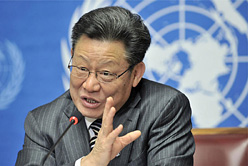
Sha Zukang
The General Assembly resolution calling for Rio+20 asks us to consider both the progress we have made and the remaining gaps in implementing commitments on sustainable development. We have embarked on a thorough analysis and review of progress and gaps.
In the face of the multiple crises facing us, the challenge in coming years will be to sustain forward momentum on the poverty and social development agenda. Even developed countries are facing setbacks. Let's face it. Averages mean little to those living in extreme poverty. A family trapped in poverty in one country can take little consolation from knowing that rates of extreme poverty have fallen steeply in some other countries. We cannot be satisfied until extreme poverty has become history.
We have been asked to consider new and emerging challenges. The first of two themes of the Conference chosen by the General Assembly is: "green economy in the context of sustainable development and poverty eradication". Can we define a credible alternative growth model and development path, one based on respect for and proper valuation of nature's wealth? How can we ensure that such a path is an inclusive one, benefiting the poor, providing decent work to the unemployed?
The second theme is the "institutional framework for sustainable development". In other words, governance. Rio+20 offers an opportunity to initiate long-overdue reforms. International institutions must function well. Otherwise, problems that affect us all will not get solved.
In addition to the two themes, Member States have highlighted a number of challenges for priority attention. They include:
• green jobs and social inclusion
• energy access, including from renewable sources, as well as efficiency and sustainability
• food security and sustainable agriculture
• sound water management
• sustainable cities
• management of the oceans
• improved resilience and disaster preparedness
Climate change cuts across all of these areas, as well as being a high priority in its own right. Sustainable consumption and production is another cross-cutting issue which affects all sectors of an economy. Progress towards this would be an important achievement.
Another important priority of particular concern to developing countries are the "means of implementation." Economic transformation and structural change towards green economies and sustainable development can involve near-term costs as well as long-term benefits. To be successful in shifting towards green, inclusive growth, developing countries will need support in the areas of technology transfer, financing and capacity building.
Question 3: How do you perceive the importance of accessibility and affordability of modern energy services as a key element for sustainable development?
A complete transformation of the global energy system is needed in the coming decades to provide sustainable energy for all, to satisfy rapid growth in energy demand, particularly in developing countries, and to diminish the negative impacts of climate change.
The availability of affordable and reliable energy services is essential for alleviating poverty, improving human welfare, raising living standards and ultimately for achieving sustainable development. Without sustainable energy services, there is no way to provide health, education, transport, telecommunications, and clean water and sanitation. In fact, inadequate energy services are an important constraint to progress in achieving the Millennium Development Goals.
Global impacts of climate change, limited natural resources, rapid increases in energy demand, and biodiversity loss demand a greater reliance on sustainable energy. Accessibility and affordability of renewable and clean energy technologies are key to ensuring sustainable energy for all. Sustainable energy stands at the center of global efforts to induce a paradigm shift towards green economies, poverty eradication and ultimately sustainable development. Sizeable investments are being made by some countries to propel innovation, development and commercialization of renewable and clean energy technologies.
Nevertheless, much more cooperation and action is needed to increase substantially the contribution of these technologies to the global energy system. A coordinated global energy strategy is necessary to support countries, especially the poorest developing countries. Efforts should concentrate on solutions for rural areas most affected by the use of traditional biomass and by the lack of electricity. International support is necessary to help remove the financial, technological, infrastructural and institutional barriers to creating the enabling environments.
UN-Energy, with all its member organizations, is playing a pivotal role and has been instrumental in defining three major goals to achieve sustainable energy for all. The goals, to be achieved by 2030, include: universal access to modern energy services, doubling overall global energy efficiency and doubling the share of renewable energy. The resolution by the General Assembly declaring 2012 as the "International Year of Sustainable Energy for All" will help spur new initiatives for the promotion of energy access, energy efficiency and the use of renewable energy technologies.
Sustainable Energy for All represents a major priority area for Rio+20. Rio+20 presents an opportunity to secure strong, high-level international support for ending energy poverty within a generation while promoting significant gains in energy efficiency and effective use of new and renewable sources of energy.
A career diplomat, Mr. Sha Zukang became the United Nations Under-Secretary-General for Economic and Social Affairs on 1 July 2007. He heads the Department of Economic and Social Affairs, which is responsible for the follow-up to the major United Nations Summits and Conferences, and services the Second and Third Committees of the General Assembly, the Economic and Social Council as well as the vast majority of its functional commissions and expert bodies. He also convenes the Executive Committee on Economic and Social Affairs, the UN Secretariat's network for joint planning and initiatives on development. His postings in diplomatic missions abroad included London, Colombo, New Delhi, New York and Geneva. Prior to assuming his present position in the United Nations, he was Ambassador and Permanent Representative of the Chinese Mission to the United Nations Office at Geneva.