

SUSTAINABLE DEVELOPMENT GOAL 7
Ensure access to affordable, reliable, sustainable and modern energy for all

The 2030 Agenda for Sustainable Development has set out 17 Sustainable Development Goals (SDGs) and 169 targets, which jointly constitute a comprehensive plan of action for people, planet, prosperity, peace and partnership.
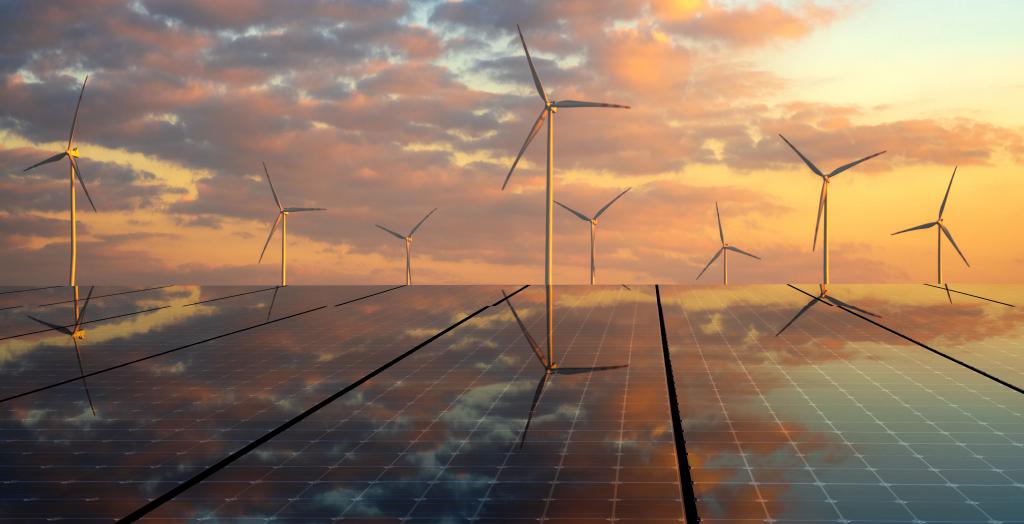
SDG7 is a first-ever universal goal on energy, with targets on access, efficiency, renewables and means of implementation. Ensuring access to affordable, reliable, sustainable and modern energy for all is crucial for achieving the Sustainable Development Goals, from its role in the eradication of hunger and poverty, through advancements in health, education, inclusive growth, sustainable cities, water supply, infrastructure, industrialization, etc., to combating climate change.
The UN High-Level Political Forum (HLPF) on Sustainable Development is the central platform within the United Nations system for the follow-up and review of the 2030 Agenda for Sustainable Development. Member States regularly undertake in-depth reviews, including through Voluntary National Reviews (VNRs), to assess progress at the country level towards achieving the 2030 Agenda for Sustainable Development and the SDGs.
Progress towards Goal 7
The 2022 edition of Tracking SDG 7: The Energy Progress Report monitors and assesses attainments in the global quest for universal access to affordable, reliable, sustainable, and modern energy by 2030. The latest available data and select energy scenarios are set forth in its 2022 report, which finds that although the world continues to advance toward SDG 7, its efforts fall well short of the scale required to reach the goal by 2030. This edition was prepared as the COVID-19 pandemic and its broad social and economic disruptions entered their third year. Some degree of economic recovery has taken place, however evolving COVID variants and an energy crisis resulting from the Ukraine conflict pose new challenges for efforts to accelerate progress on SDG 7.
Universal access
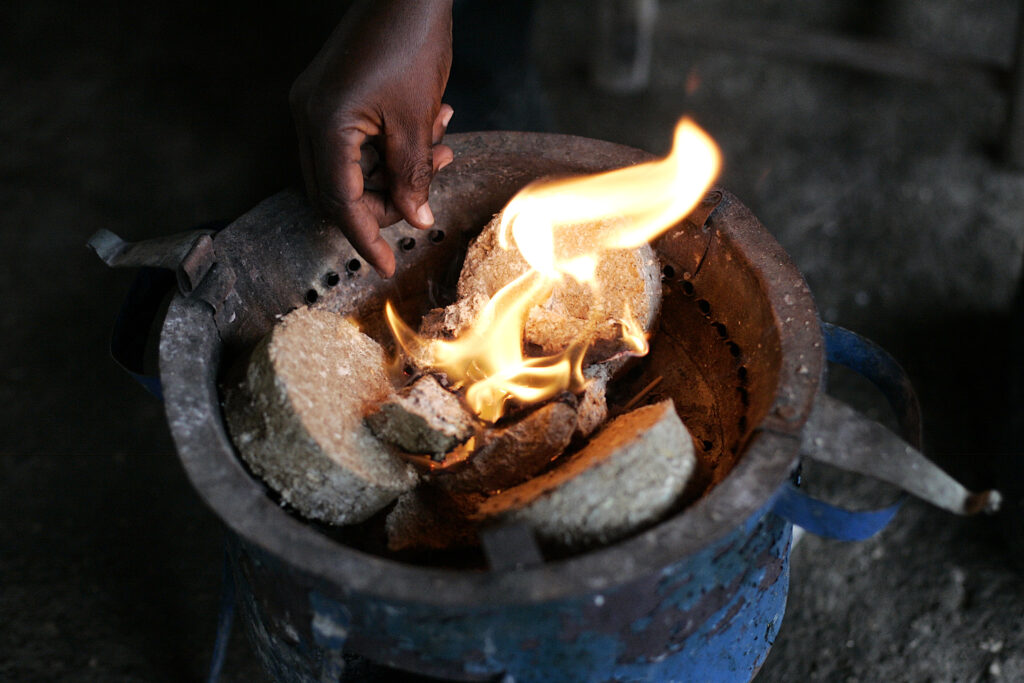
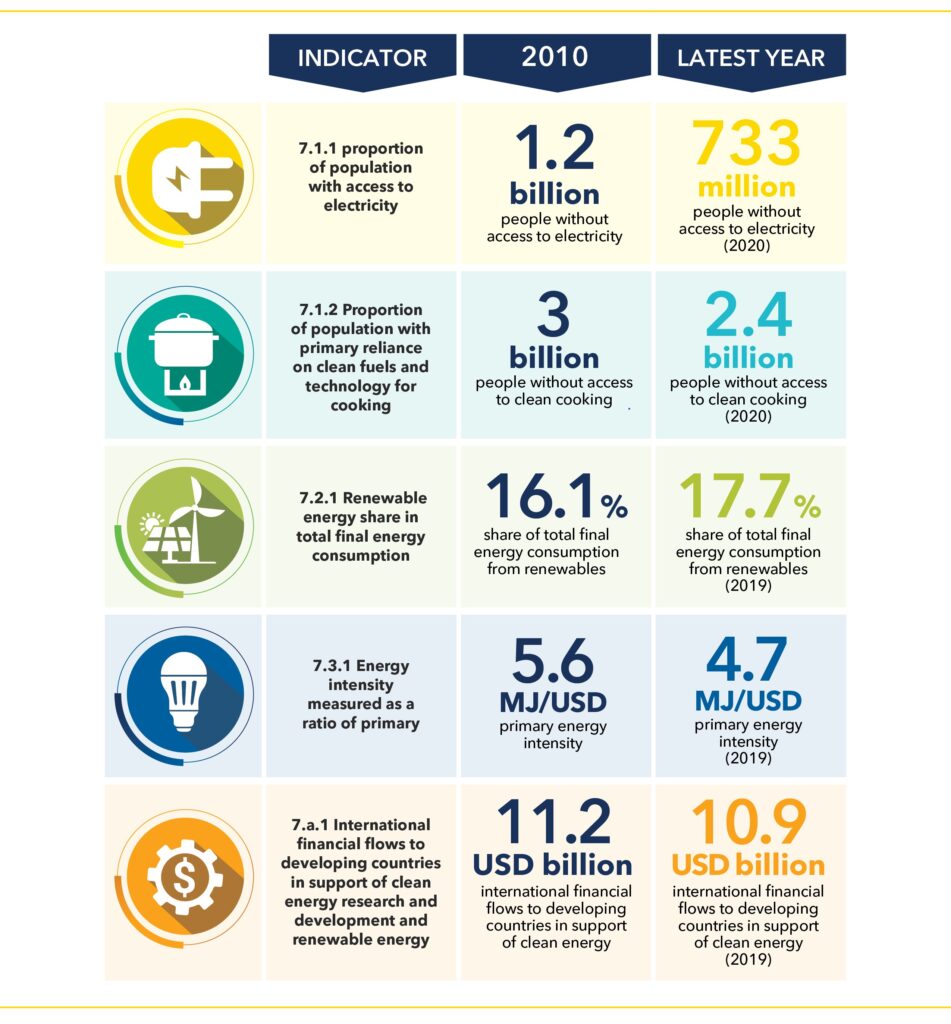
SDG target 7.1 is universal access to affordable, reliable, sustainable, and modern energy services; with 7.1.1 focusing on access to electricity and 7.1.2 focusing on access to clean cooking solutions. Globally, 91 percent of the population had access to electricity in 2020, leaving 733 million people unserved. Despite the continuous advances since 2010, the pace of progress has slowed in recent years because of the disruptions by the COVID-19 crisis as well as the growing complexity of connecting remote and poorer people. In 2020, 69 percent of the global population had access to clean cooking fuels and technologies which presents an increase of about 70 million people from the previous year. But still, some 2.4 billion people—one third of the world population—lacked access. Increased efforts are needed to ensure universal access to both electricity and clean cooking, consistent with SDG target 7.1.
Energy efficiency
SDG target 7.3 aims to double the annual global rate of improvement in primary energy intensity in 2010–30 versus 1990–2010 to 2.6 percent. In 2010–19, global annual improvements in energy intensity averaged around 1.9 percent, well below the levels needed. To make up for lost ground, the average annual rate of improvement now has to reach 3.2 percent to reach SDG 7.3’s target. This rate would need to be even higher—consistently over 4 percent for the rest of this decade—if the world is to reach net-zero emissions from the energy sector by 2050, as envisioned in the IEA’s Net Zero Emissions by 2050 Scenario. Early estimates for 2020 point to a substantial decrease in intensity because of the COVID-19 crisis.
Renewable energy
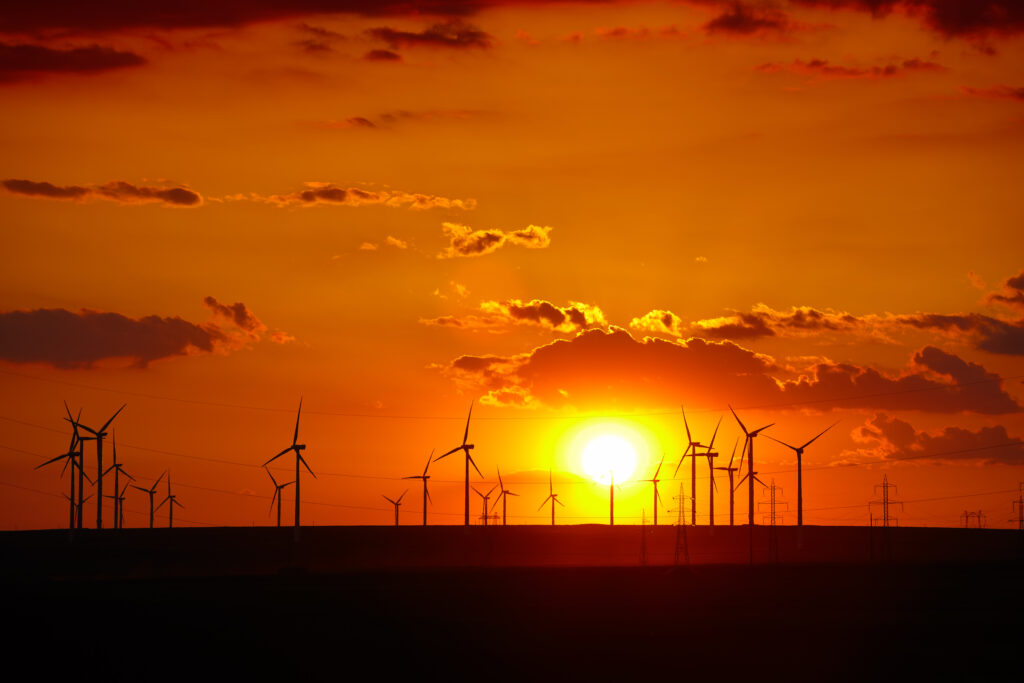
SDG Target 7.2 aims to increase substantially the share of renewable energy in the global energy mix. Despite continued disruptions in economic activity and supply chains, renewable energy consumption grew through the pandemic, in contrast with other energy sources. However, countries most in need of increased access lag behind, including in terms of installed capacity to generate renewable electricity. Moreover, rising commodity, energy and shipping prices, as well as restrictive trade measures, have increased the cost of producing and transporting solar photovoltaic (PV) modules, wind turbines, and biofuels worldwide, adding uncertainties for future renewable energy projects. The share of renewable would need to reach well over 30 percent of global TFEC by 2030 to be on track for reaching net-zero energy emissions by 2050.
International public financial flows
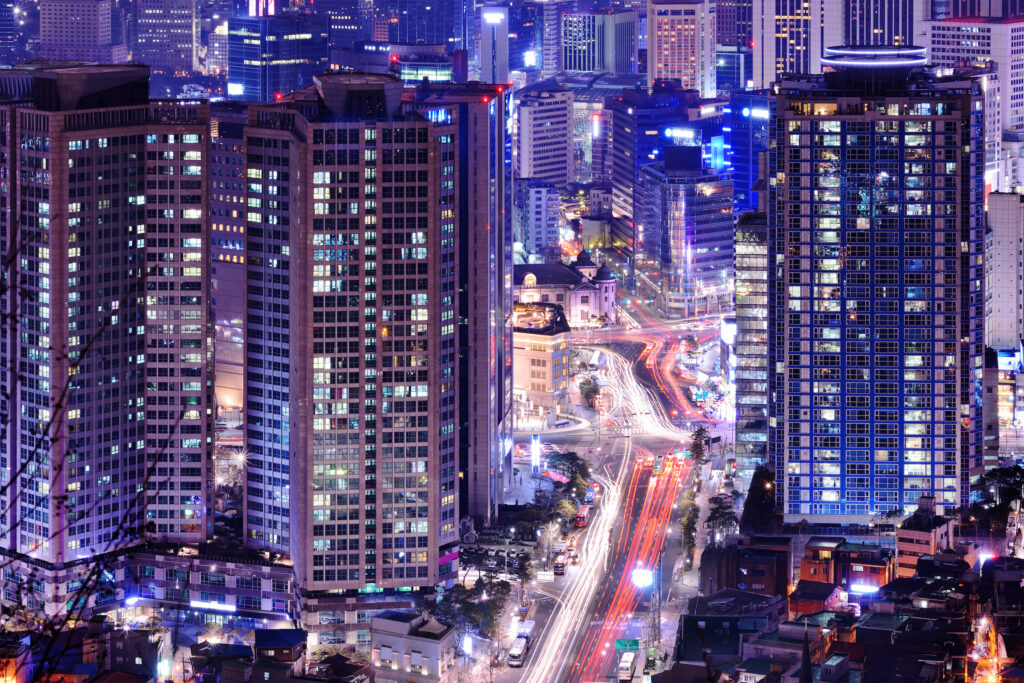
Tracking of SDG 7.a.1 indicator shows that international public financial flows to developing countries in support of clean energy decreased for the second year in a row, falling to USD 10.9 billion in 2019. This level represents a 23 percent decrease from the USD 14.0 billion provided in 2018, a 25 percent decline from the 2010–19 average, and a more than 50 percent drop from the peak of USD 24.7 billion in 2017. Flows need to be increased to realize SDG 7 as well as enable the achievement of related SDGs including SDG 13 (on climate), especially in light of the reduced fiscal space in many developing countries and the imperatives to ensure a rapid and sustainable recovery from the COVID-19 pandemic.
Source: Tracking SDG 7: The Energy Progress Report 2020
TARGETS
7.1 By 2030, ensure universal access to affordable, reliable and modern energy services
7.2 By 2030, increase substantially the share of renewable energy in the global energy mix
7.3 By 2030, double the global rate of improvement in energy efficiency
7.A By 2030, enhance international cooperation to facilitate access to clean energy research and technology, including renewable energy, energy efficiency and advanced and cleaner fossil-fuel technology, and promote investment in energy infrastructure and clean energy technology
7.B By 2030, expand infrastructure and upgrade technology for supplying modern and sustainable energy services for all in developing countries, in particular least developed countries, small island developing States, and land-locked developing countries, in accordance with their respective programmes of support
INDICATORS
7.1.1 Proportion of population with access to electricity
7.1.2 Proportion of population with primary reliance on clean fuels and technology
7.2.1 Renewable energy share in the total final energy consumption
7.3.1 Energy intensity measured in terms of primary energy and GDP
7.A.1 International financial flows to developing countries in support of clean energy research and development and renewable energy production, including in hybrid systems
7.B.1 Investments in energy efficiency as a percentage of GDP and the amount of foreign direct investment in financial transfer for infrastructure and technology to sustainable development services